
How Do Late Nights and Irregular Sleep Affect
Runners?
Training is only one part of improvement.
If you regularly sleep late, sleep too little or change your sleeping time every day,
your body may not recover effectively.
Is Sleeping Late Always Bad?
Not necessarily.
Sleeping from 1:00 am to 9:00 am still provides eight hours of sleep.
However, problems may occur when you:
Sleep late but wake up early
Change bedtime constantly
Get insufficient total sleep
Have poor-quality or interrupted sleep
Train early before recovering properly
A regular sleep schedule helps your body maintain a stable internal body clock,
or circadian rhythm.
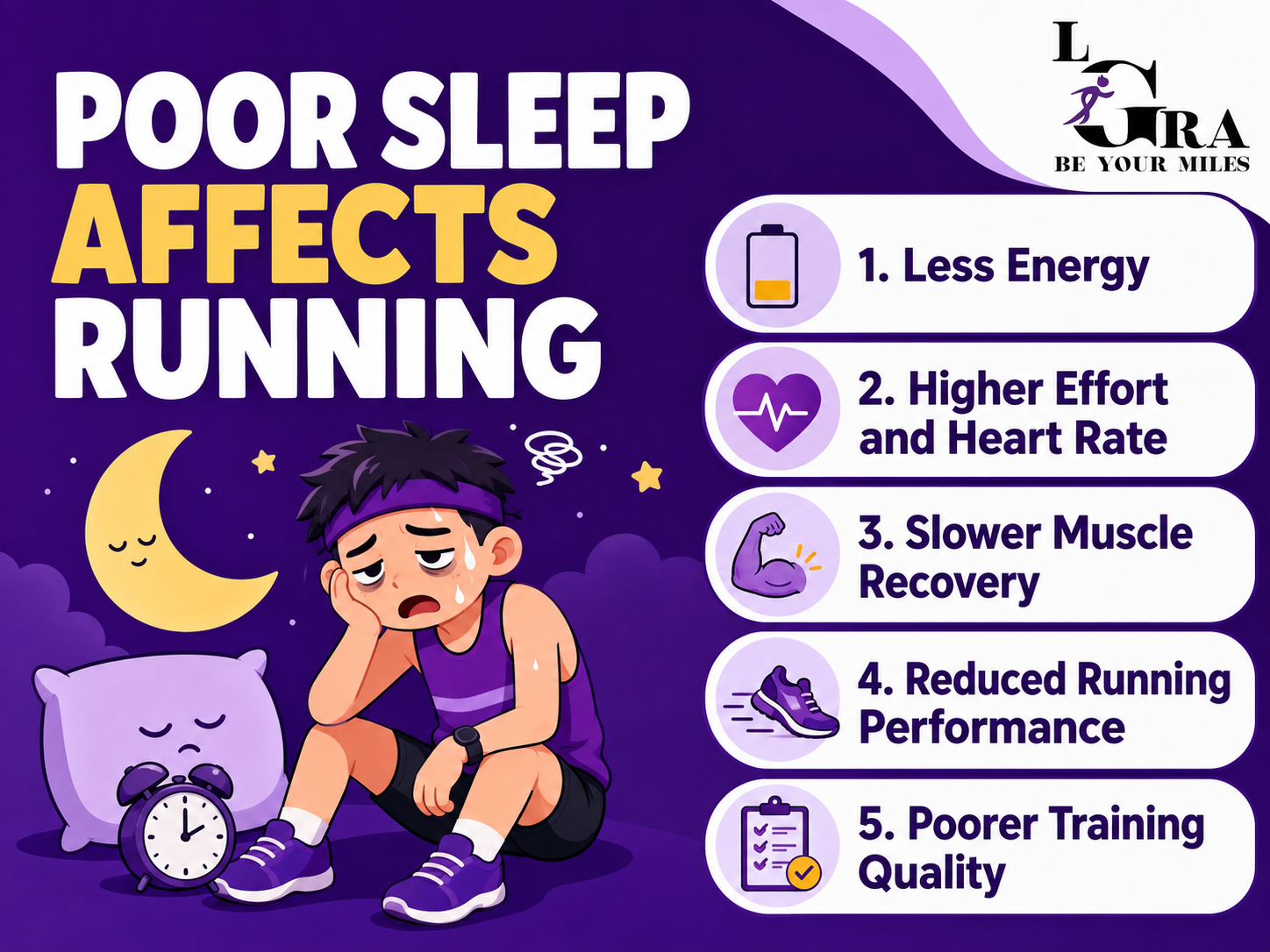
How Can It Affect Running?
1. Less Energy
You may feel tired before training
Easy pace may feel more difficult
Longer runs may become harder to complete
Motivation and concentration may decrease
2. Higher Effort and Heart Rate
Poor sleep may cause:
Normal pace to feel harder
Higher perceived effort
Slower heart-rate recovery
Difficulty controlling training intensity
Heart rate is also affected by hydration, temperature, stress, illness and
accumulated fatigue.
3. Slower Muscle Recovery
Sleep supports:
Muscle repair
Tissue recovery
Energy restoration
Adaptation to training
Insufficient sleep may leave your legs feeling:
Heavy
Weak
Tight
Sore for longer
4. Reduced Running Performance
Sleep loss may negatively affect:
Endurance
Speed
Strength
Reaction time
Decision-making
Running technique when tired
Research suggests that sleep deprivation has a moderate negative effect on
endurance performance.
Systematic review on sleep deprivation and endurance
5. Poorer Training Quality
When you are sleepy:
Pace control may become inconsistent
Technique may break down earlier
Coordination and reaction may decrease
Hard workouts may produce less benefit
Your body may require longer recovery
Why Is an Inconsistent Sleep Time a Problem?
Changing your sleep schedule repeatedly may disturb your natural sleep–wake cycle.
For example:
Monday: Sleep at 10:30 pm
Tuesday: Sleep at 1:00 am
Wednesday: Sleep at 11:00 pm
Thursday: Sleep at 2:00 am
Weekend: Wake up around noon
Even if the total weekly hours look acceptable, your body may struggle to predict
when to rest, recover and become alert.
Healthy sleep includes sufficient duration, good quality and a reasonably consistent
schedule.
How Much Sleep Do Runners Need?
Most adults should aim for at least seven hours of sleep each night.
Some runners may benefit from more sleep during:
High-mileage training
Intensive workout periods
Race preparation
Recovery from illness or injury
Weeks with early-morning training
Your individual needs may differ.
Practical Tips for Runners
Keep a regular bedtime and wake-up time
Avoid large changes during weekends
Plan earlier sleep before morning training
Reduce screen exposure before bedtime
Avoid late caffeine if it affects your sleep
Keep the bedroom dark, quiet and comfortable
Avoid intense training too close to bedtime if it keeps you awake
Use a short nap when necessary without replacing normal nighttime sleep
Reduce workout intensity after a very poor night
The CDC recommends maintaining a regular bedtime and wake-up time,
including on weekends.
Should You Train Hard After Poor Sleep?
After one poor night, you may still complete a suitable easy or controlled session.
Consider reducing the intensity if you experience:
Unusual exhaustion
Dizziness or poor concentration
Abnormally high heart rate
Heavy legs during warm-up
Poor coordination
Signs of illness
One modified workout will not destroy your progress.
Forcing a hard session when poorly recovered may create more fatigue than improvement.
LGRA Coaching Message
Consistent training requires consistent recovery.
Sleeping late is not the only problem.
Insufficient, poor-quality and irregular sleep can all affect a runner's progress.
A good training plan should consider:
Training intensity
Nutrition and hydration
Stress and daily schedule
Sleep duration
Sleep consistency
Recovery condition
Train consistently. Sleep consistently.
Allow your body to become stronger.


